
Article Summary:
- Anticipatory grief is the emotional response to an expected loss, often occurring before the death of a loved one or during a terminal illness.
- Common symptoms include depression, anxiety, sadness, fear, loneliness, guilt, physical discomfort, and a desire to talk or seek support.
- Children also experience anticipatory grief, though their reactions vary based on age, emotional maturity, and understanding of death.
- The purpose of anticipatory grief is to help both patients and families process the coming loss, find closure, and create meaningful final moments.
- Being present with a dying loved one can offer emotional healing, acceptance, and the chance to say goodbye.
- Coping strategies include focusing on quality time, resolving unfinished business, building a support network, preparing practically, and seeking professional help.
- Self-care is essential—take breaks, move your body, journal, and lean on spiritual or emotional support.
- Samaritan offers grief support, hospice guidance, and compassionate care throughout South Jersey. Call (856) 596-8550 to learn more.
Anticipatory Grief: Definition
 When people hear the word “grief,” they often think of the emotions that follow someone’s death. But grief doesn’t always wait for a loss to happen.
Anticipatory grief is the emotional pain and mourning experienced before a death or major loss. It often occurs when someone is terminally ill, facing age-related decline, or losing their independence or identity due to disease. This type of grief can affect loved ones as well as the person who is ill or dying.
Anticipatory Grief Symptoms
Anticipatory grief can feel like a roller coaster. Some days may be filled with overwhelming sadness; others might feel strangely normal or even hopeful. You may even feel guilty over your shifting emotions. However, these emotional fluctuations are natural, and it does not mean you love the person any less. Everyone grieves differently; there is no right or wrong way to mourn. The most common symptoms of anticipatory grief include:
1. Depression
Persistent feelings of sadness, emptiness, or hopelessness may last for two weeks or more. Depression can also include physical symptoms like fatigue, restlessness, changes in sleep, or unexplained aches and pains.
2. Anxiety
You may experience ongoing tension or worry, which can result in physical symptoms such as elevated blood pressure, trembling, and heart palpitations.
3. Irritability and Anger
Strong emotions are normal during anticipatory grief. You may feel angry about the situation or find it difficult to cope with your loved one’s own frustration or emotional shifts.
 4. Heightened Concern for the Ill Person
It’s common to become increasingly focused on your loved one’s emotional, physical, or spiritual well-being.
5. Preoccupation with Death
You may find yourself thinking frequently about what your loved one’s death will be like, or what life will look like afterward. If you are the person who is ill, you may reflect on how your family will carry on without you.
6. Mourning Changes in Your Loved One
You may begin grieving the gradual loss of your loved one’s personality, abilities, or physical appearance, long before their death.
7. Sadness and Crying
Grief can be triggered unexpectedly. A song, commercial, photo, or even a scent might bring tears as you anticipate what’s to come.
8. Fear
It’s natural to feel fear about the unknown—what dying will be like, how you’ll cope, or how others will be affected.
9. Loneliness
Even while your loved one is still alive, you may feel emotionally isolated. Caregivers in particular often feel alone in their grief and unsure how, or whether, to share it.
10. A Strong Desire to talk
You may feel a deep need to share your thoughts and emotions with someone who truly understands and listens. Support groups, counselors, or trusted friends can provide essential comfort. Find support groups in South Jersey here.
11. Guilt
Anticipatory grief often includes guilt. You might:
- Feel guilty for wanting your loved one’s suffering to end
- Feel “survivor guilt” for continuing your life after their death
- Regret past disagreements or missed opportunities
- Feel guilt for enjoying something they can no longer do
12. Physical Symptoms
Grief doesn’t just affect the mind. You may experience:
- Sleep problems
- Appetite changes
- Memory issues
- Headaches
- Back, neck, or chest pain.
Anticipatory Grief in Children
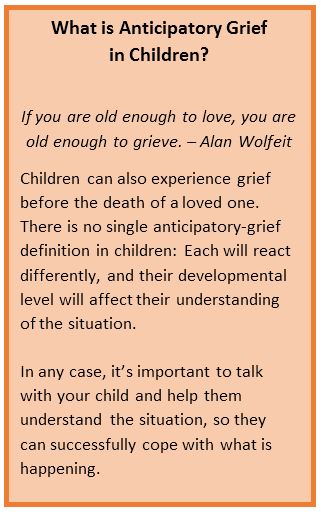
Just like adults, children can experience anticipatory grief when someone they love is seriously ill or nearing the end of life. Although grief may look different in children, it is very real and deserves compassion and support.
There’s no one-size-fits-all definition of anticipatory grief in children. Each child responds differently, depending on their:
- Age
- Emotional maturity
- Understanding of death
- Relationship with the person who is ill
Some children may cry or become withdrawn. Others may act out, ask questions repeatedly, or appear unaffected. Their grief can come in waves or appear at unexpected times.
Helping Children Deal with Anticipatory Grief
The most important step is to talk openly and honestly with your child in age-appropriate terms. Let them know:
- It’s okay to feel sad, angry, or confused
- Their questions are welcome
- They are not alone in their feelings
Offer comfort, routine, and reassurance, but don’t avoid the topic entirely. Children benefit from being included in what’s happening and from knowing they can share their thoughts without fear.
If needed, consider involving a grief counselor or child life specialist, especially if the child is struggling to express themselves or showing signs of distress.
Purpose of Anticipatory Grief
 Anticipatory grief is a natural and meaningful response to the expected loss of a loved one. Though it can be painful, it also offers important emotional opportunities for both the person who is dying and their loved ones.
For the Person Who is Dying
Anticipatory grief allows the individual facing the end of life to:
- Reflect on what matters most
- Address unresolved issues or regrets
- Find meaning, closure, and peace
For Family and Loved Ones
For caregivers, family, and friends, anticipatory grief:
- Creates space to reconcile and express love
- Helps prepare emotionally for the coming loss
- Offers time to say goodbye in a meaningful way
Why Being Present Matters
Many people hesitate to visit a loved one who’s dying, wanting to preserve the memory of “how they used to be.” However, being present during this time can be profoundly healing. Sharing final moments, even in silence, helps the process of acceptance. It can also make it easier to let go and offer your loved one permission and peace to do the same.
How to Deal with Anticipatory Grief
1. Focus on Quality of Life
Rather than hoping for a cure, focus on small, achievable goals. Help your loved one enjoy a “good” day, whether that means comfort, connection, or simply peaceful moments.
2. Build a Support Network
Lean on others. Ask friends, family members, or community members for emotional support or help with caregiving. A strong network can help you feel less isolated – before and after your loved one’s passing.
3. Spend Meaningful Time Together
Find comfort in shared moments. Talk, reminisce, listen to favorite music, or do activities that bring joy, no matter how small.
4. Don’t Wait to Resolve Unfinished Business
Say what needs to be said. According to Dr. Ira Byock in “The Four Things that Matter Most,” four simple phrases –
- “Please forgive me”
- “I forgive you”
- “Thank you”
- “I love you”
— can bring tremendous healing and peace for both parties.
5. Prepare Practically
If your loved one is still able, talk about legal, financial, and end-of-life decisions together. These conversations can bring clarity, reduce anxiety, and empower everyone involved. Find End of Life Conversation Resources here.
6. Seek Professional Support
Hospice teams – including nurses, doctors, or social workers, and chaplains — can provide emotional and spiritual guidance throughout the journey. Don’t hesitate to ask for help.
7. Educate Yourself
Understanding your loved one’s condition and what to expect can help reduce fear. Learn about the illness, treatments, and symptoms so you feel more informed and emotionally prepared.
8. Help Your Loved One Adjust
Declining health can cause emotional pain for the person who is ill. Acknowledge their feelings. Look for new ways they can still enjoy old passions.
For example: A Samaritan patient was a lifelong pianist could no longer sit at the piano. His care team provided a portable keyboard, which he played from his bed — bringing him joy and comforting those around him.
Caring for Yourself During This Time
Your emotional well-being matters. Here are some ways to take care of yourself while you care for someone else:
Do things you enjoy – even if only briefly.
- Take breaks – ask others for help with caregiving.
- Get moving – even short walks can ease stress as often as possible.
- Write it out – journaling can help process emotions.
- Prioritize presence over perfection – let go of non-urgent chores.
- Seek spiritual support – through your faith, meditation, or reflection.
Need Support?
If you live in South Jersey and have questions about grief support or end-of-life care, please call Samaritan at (856) 596-8550 or contact us online.
We are here to help you and your loved one find comfort, peace, and connection during this important time.