(856) 596-1600 | Start a Referral

(856) 596-1600 | Start a Referral
The Boccolini Institute is committed to research and sharing resources. These are publications where our research has been published. Some are accessible here and some will be linked as they require a membership to the publication.
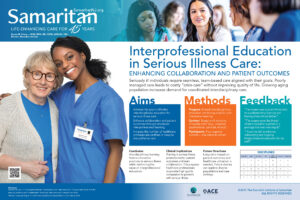
Serious illness care requires coordinated, goal-concordant decision-making across disciplines. Yet fragmented communication and unclear team roles can lead to avoidable interventions and poor patient/family experience. Interprofessional Education (IPE) is a scalable strategy to strengthen collaboration, improve care delivery, and support workforce confidence in hospice and palliative settings.
As the general population ages and develops increasingly complex medical needs, the demand for competent and confident palliative care providers will continue to grow.
These providers play a critical role in delivering compassionate, patient-centered care. However, the nuances of this medical specialty—which include symptom
management, communication skills, emotional support and advanced care planning— can be a source of uncertainty and stress for medical professionals. Improving provider confidence may be a critical element in improving patient care
Heart failure patients often arrive at hospice with advanced symptoms, variable care plans, and limited coordination across settings. To address this, Samaritan pursued the American Heart Association Palliative/Hospice–Heart Failure Certification. The initiative required a full system redesign focused on standardizing education, documentation, care coordination, and performance measurements. This article outlines the challenges encountered, including low compliance rates and documentation barriers, and describes the process used to achieve certification in October 2025.
Key strategies included forming an interprofessional Advanced Illness Management Committee, implementing new triage and clinical tools, launching performance improvement plans, and fostering a culture of collaborative learning. The resulting care model now serves as a framework for additional serious illness pathways and offers a replicable approach for hospice and palliative care programs seeking to strengthen cardiac care delivery.
Educators across higher education, healthcare, and adult learning are increasingly challenged to create engagement that persists beyond the platform itself. This session explores how evidence-based engagement strategies, including scenario-based learning, microlearning, and gamification, can be adapted across both digital and community-based environments. Grounded in behavioral learning science, the presentation examines how retrieval practice, feedback, spaced reinforcement, visible progress, and social learning influence persistence and practice change. Participants will explore practical examples ranging from AI-supported content development and online engagement tools to low-tech community adaptations. Designed for educators, trainers, and instructional leaders, this session offers scalable, practical strategies for building learning experiences that are not only engaging, but durable, transferable, and operationally sustainable.
Individuals with serious illness require care that is timely, coordinated, and aligned with their goals and values. Fragmented care often leads to unnecessary interventions and increased healthcare spending without improving quality of life. As the population of older adults with multiple chronic conditions grows, the need for team-based, well-coordinated care is more urgent than ever. This initiative addresses the gap in effective interprofessional
education (IPE) by implementing a structured program to enhance collaboration and improve outcomes in serious illness care.
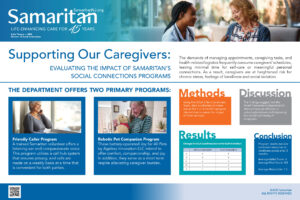
The demands of managing appointments, caregiving tasks, and health-related logistics frequently consume caregivers’ schedules, leaving minimal time for self-care or meaningful
personal connections. As a result, caregivers are at heightened risk for chronic stress, feelings of
loneliness and social isolation.
This study examines the effectiveness of the Friendly Caller and Robotic Pet programs offered by Samaritan’s Social Connections Department as an innovative method of providing support to caregivers.
Utilizing the Action Guide by Healthy Places by Design to foster community partnerships in addressing social isolation and loneliness as well as other SDOH to improve population health and reduce health disparities.
This study explores the role of community partnerships developed from the Social Isolation, Loneliness, and Connection Collaborative (SILCC) in addressing SDOH, with a specific focus on social isolation and loneliness.
The SILCC initiative brings together diverse stakeholders,
including healthcare providers, community organizations, and policymakers, to combat social isolation and loneliness, which are significant Social Determinants of Health impacting mental and physical health.
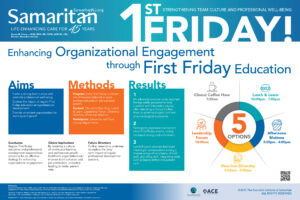
In healthcare, fostering a culture of connection, learning, and professional well-being is essential for delivering high-quality care. This initiative explores the impact of First Friday, a monthly education and development program at Samaritan, designed to enhance team cohesion, job satisfaction, and staff well-being through consistent, interdisciplinary learning experiences.
This poster explores confidence levels in palliative medicine skills amongst members of an interdisciplinary palliative medicine team. The research assesses where palliative providers feel the strongest, and where they feel they need the most development.
This work discusses the real and personal cost of the COVID-19 pandemic on the mind, body, and spirit of healthcare workers. It suggests a proactive and reactive response that participants can activate within themselves, their clinical teams, and their organizations. The pervasive losses, both death and non-death-related, have transformed how healthcare workers deliver care while grieving their personal and professional losses. This grief further complicates the mental health of healthcare workers. Evidence from previous outbreaks suggests that the psychological burden of the pandemic will have both short and long-term effects. Recovery involves healing the body with physical compassion, healing the mind by exploring difficult emotions, and healing the spirit by recognizing and reclaiming one’s purpose and meaning. Three strategies: Spark Joy, Ambiguity Bookmark, and Healing and Restoration: a Nautical Journey through Grief demonstrate how small and intentional changes provide momentum and set the course for long-term transformation.
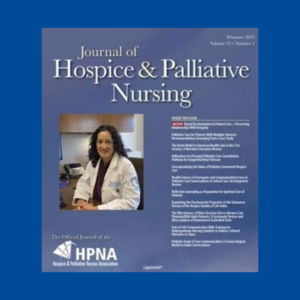
The following case study describes what is known as the health care system’s open secret of allowing a patient or family to refuse care from a clinician of another race. This article explores the ethical tension between autonomy, nonmaleficence, justice, and duty to treat as it relates to racism and the potential harm to clinicians, health care teams, and organizations.
When racism is experienced within the clinical setting, clinician knowledge, organizational training, and moral character are essential for identifying and addressing it effectively. Racial discrimination and related mistreatment are not part of a responsive and proactive moral community. This article explores creative solutions that preserve patient-clinician relationships without sacrificing personal integrity when racism is encountered.